



Backland development with ground investigation
A new development on land behind an electricity substation, with foundations designed from a geotechnical ground investigation.
The project
This was a new development on land behind an electricity substation in Winchmore Hill. The foundations were designed from a geotechnical ground investigation, which we reviewed alongside developing the structural scheme for the new building. Using measured ground data in this way is the most reliable route to a foundation design, particularly on land with an unknown history. Backland sites often have exactly that kind of history, having been used for storage, gardens or utilities over many decades.
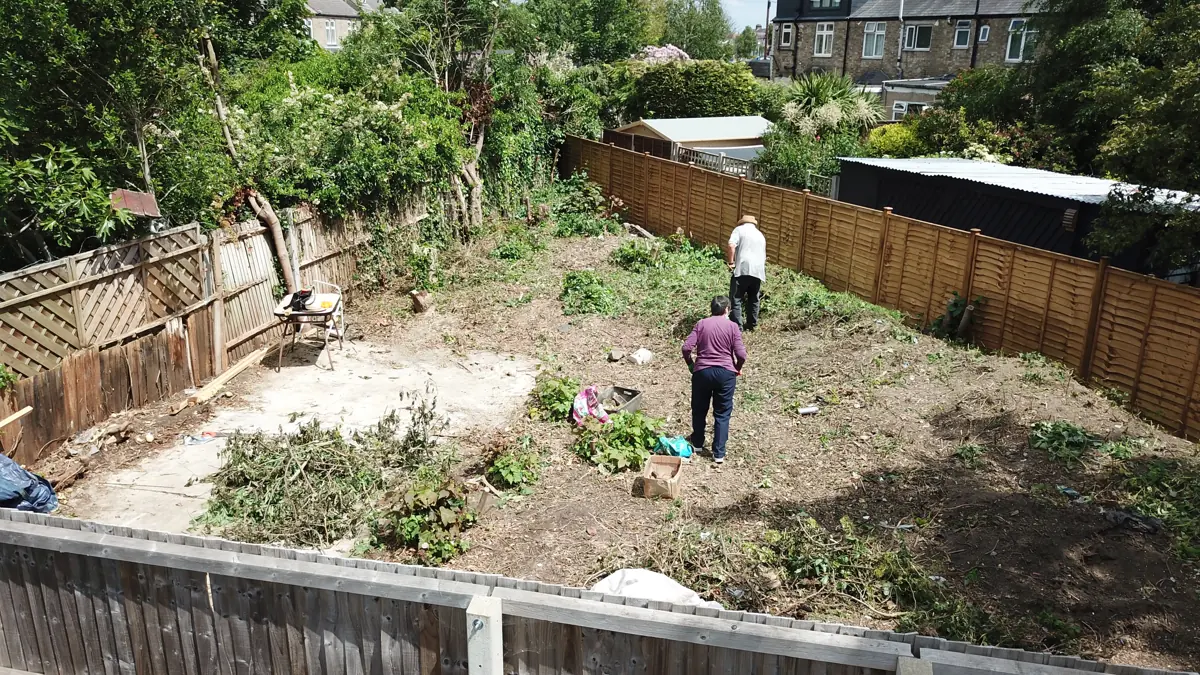
Backland plots like this are often the last pieces of land left in established areas, tucked behind houses or infrastructure. A low drone view taken during site clearance shows the cleared plot, with timber fences and the backs of neighbouring houses close by. Next to a substation there may also be buried cables and restrictions on where excavation can go, which a design has to respect.
What we did
- Review of the geotechnical ground investigation report
- Foundation design to suit the ground conditions
- Structural scheme for the new building
Letting the ground investigation lead
We reviewed the geotechnical ground investigation report first. A review like this looks at soil types and strengths, groundwater and any made ground, because those findings set the foundation type and depth. Designing from real data rather than assumptions avoids both over-design and the risk of meeting unexpected ground once excavation starts. It also gives Building Control a clear basis for accepting the design, as the foundation choice can be traced straight back to the reported ground conditions.
The foundation design was then matched to the ground conditions, and the structural scheme for the building was developed to bring loads down to those foundations efficiently. Keeping the scheme simple and the load paths direct helps on a tight backland plot, where access for plant and materials is limited. Our clay and foundations guide explains how ground conditions shape foundation choice across north London.
What a ground investigation feeds into
- Soil types and strengths at foundation level
- Groundwater levels
- Made ground or old fill
- Foundation type and depth
Planning something similar?
On backland sites, a ground investigation is usually worth commissioning before foundation design. It turns the design from guesswork into a clear decision and can prevent costly changes once excavation has started. See more of our foundation and new-build work in Enfield.