



Structural engineer in Croydon
Structural engineers for houses, flats, conversions and mixed-use buildings in Croydon. We have worked on 17 projects across CR0, CR2, CR5, CR7, CR8, SE19, SE25 since 2019.
Structural engineering in Croydon
Croydon sits on London's southern edge and is one of its most varied boroughs. It runs from Thornton Heath (CR7), South Norwood (SE25) and Upper Norwood (SE19) in the north, through central Croydon, Addiscombe and Shirley (CR0), to South Croydon and Sanderstead (CR2), Purley and Kenley (CR8) and Coulsdon (CR5) on the slopes of the North Downs. We have worked on 17 projects in the borough since 2019.
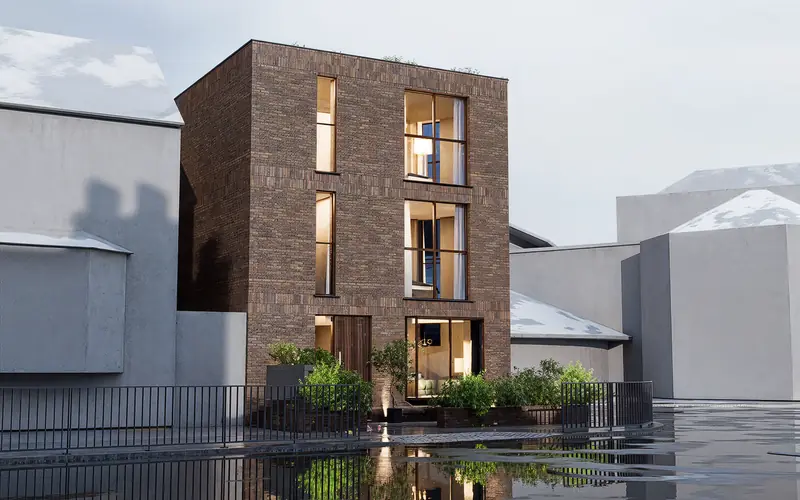
In central Croydon (CR0) we designed the foundations and structure for a new house built in place of a demolished commercial unit. Replacing a commercial building with a home raises questions about old foundations, buried services, ground conditions and neighbouring walls, and all of them have to be answered before the new structure is designed. Similar issues come up on the many infill and backland plots across the borough.
Norwood terraces, Addiscombe semis and hillside houses
Thornton Heath, Selhurst and South Norwood are mostly Victorian and Edwardian terraces, with larger villas on the Norwood ridge around Crystal Palace and Upper Norwood. Addiscombe and Shirley have Edwardian and interwar houses, and central Croydon mixes older terraces with shops, offices and new flats.
South of the town centre, Sanderstead, Selsdon, Purley, Kenley and Coulsdon are mainly interwar and post-war detached and semi-detached houses, many on sloping plots with retaining walls and steep drives. Large gardens have made the south of the borough a focus for infill houses and small blocks of flats.
From London Clay to the chalk of the North Downs
The north of Croydon, including Thornton Heath and South Norwood, sits largely on London Clay, which shrinks and swells with moisture and is strongly affected by trees. The Norwood ridge adds steep slopes. Around the town centre, sands, gravels and the Lambeth Group appear, and the River Wandle rises nearby.
In the south the Chalk of the North Downs is at or near the surface, with clay-with-flints on the hilltops and dry valleys between them. Chalk can contain solution features, and some valleys, including around Purley and Kenley, have a history of groundwater flooding when the chalk is saturated. On sloping plots, retaining wall design is often needed alongside the foundations.
Structural work typical of Croydon
Croydon work ranges from lofts and extensions on northern terraces to new houses on infill plots and replacements for older buildings in the centre and south. Hillside sites in CR2, CR5 and CR8 often need retaining walls, careful excavation and foundations stepped down the slope.
- New houses replacing commercial or garage units
- Infill and backland homes on large plots
- Retaining walls on sloping gardens
- Lofts and rear extensions in Thornton Heath
- Foundations on chalk and clay-with-flints
- Subsidence investigations on London Clay
Services most requested
Projects in Croydon
Croydon Council, slopes and drainage
Croydon has conservation areas in places such as Upper Norwood and South Norwood, and Croydon Council can confirm whether your site is in one. New homes on infill plots usually need a drainage strategy, and soakaways only work where the ground allows water to soak away, which is often easier on chalk than on clay.
Our guide to drainage strategies for planning explains what councils look for. Building over or close to a public sewer needs Thames Water's agreement, and our build over or near sewer technical package prepares the submission.
Questions about structural work in Croydon
Can I build a new house where a commercial unit used to stand?
Often, subject to planning. Structurally, the old foundations, slabs and buried services need investigating, along with any neighbouring walls that relied on the old building for support. New foundations are then designed for the actual ground conditions. We did exactly this for a new house replacing a demolished commercial unit in central Croydon.
Is chalk good ground to build on in Purley and Coulsdon?
Intact chalk is generally a good bearing material, but it can be weathered near the surface, contain solution features or be covered by clay-with-flints. Groundwater can also rise in some valleys after wet winters. A desk study and trial pits confirm conditions, and Building Control will usually inspect the excavations before concrete is poured.
Do I need a retaining wall for my sloping garden in Sanderstead?
If you are cutting into the slope to form a terrace, extend the house or build a garage, almost certainly. Retaining walls must resist soil and water pressure, and many failures come from poor drainage behind the wall rather than the wall itself. An engineer designs the wall, its foundation and its drainage together.
Why are houses in Thornton Heath prone to cracking?
Many sit on London Clay, which shrinks in dry summers, especially near trees, and older terraces often have shallow footings. Leaking drains and poorly supported past alterations are also common causes. The fix depends on the cause, and our underpinning explainer sets out when underpinning is genuinely needed and when it is not.