



Structural engineer in Lambeth
Structural engineers for houses, flats, conversions and mixed-use buildings in Lambeth. We have worked on 37 projects across SE11, SE27, SW16, SW2, SW4, SW8, SW9 since 2019.
Structural engineering in Lambeth
Lambeth runs south from the Thames at Vauxhall (SW8) and Kennington (SE11) through Stockwell and Brixton (SW9), Clapham (SW4) and Brixton Hill (SW2) to Streatham (SW16) and West Norwood (SE27). We have completed 37 projects in Lambeth since 2019. The borough's period terraces, converted houses and mansion blocks produce a steady flow of conversion and alteration work, much of it inside existing buildings.
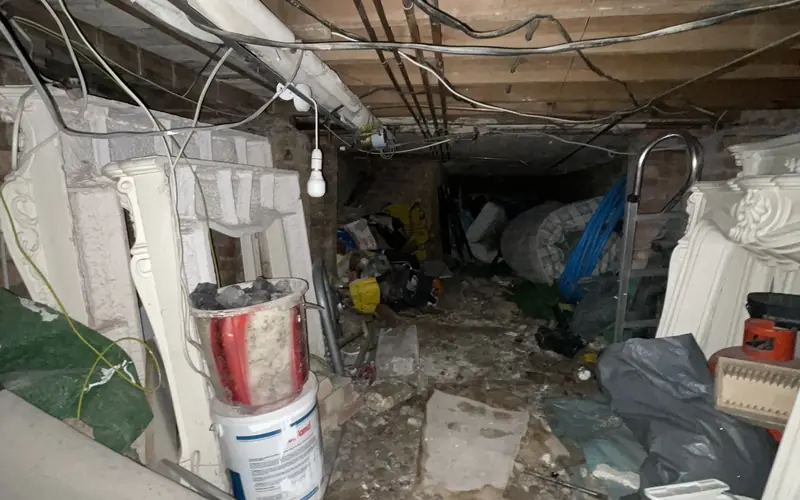
One recent job in Streatham turned an existing cellar into a self-contained one-bedroom flat, with external alterations to bring in light and access. It is typical of the kind of project common in Lambeth, where owners and small developers look for space within the buildings they already have rather than building outwards into gardens or upwards into roofs. That puts the focus on headroom, waterproofing and support.
Kennington Georgian, Brixton conversions and Streatham mansion blocks
Kennington and Vauxhall keep a good stock of Georgian and early Victorian houses, a number of them listed, with front basements and vaults under the pavement. Clapham, Stockwell and Brixton are largely Victorian, with big semi-detached villas and terraces, many split into flats whose upper floors and roof spaces are often reworked.
Streatham and West Norwood have Victorian and Edwardian houses, some substantial, along with interwar mansion blocks on the main roads and later estates. Cellars are common in the bigger Victorian houses, giving scope for conversion if headroom, damp and daylight can be dealt with.
From Thames alluvium to the Norwood ridge
North Lambeth, near the river, sits on alluvium and river terrace gravels over London Clay, with groundwater relatively close to the surface. Through Brixton and Clapham the ground is mainly London Clay with gravel patches. The land rises toward Streatham and Norwood, where clay slopes bring retaining walls and slope stability into play.
The buried River Effra runs through Brixton toward Kennington, and its former course can hold weak or filled ground. Seasonal clay shrinkage linked to trees is behind much of the cracking in Streatham and Clapham. For cellar and basement projects, groundwater and hydrology screening is often an early requirement.
Structural work common in Lambeth
With so many converted houses and mansion blocks, much of our Lambeth work involves flats: new openings, lofts above top-floor flats, cellar conversions and alterations agreed with freeholders. Houses in single occupation bring side returns, lofts and basements, as elsewhere in south London.
- Cellar conversions to self-contained flats
- Loft conversions above top-floor flats
- Wall removals in Clapham and Brixton conversion flats
- Splitting larger Streatham houses into flats
- Underpinning and repairs near trees
- Retaining walls on sloping Norwood plots
Services most requested
Projects in Lambeth
Lambeth's basement policy, conservation areas and freeholders
Lambeth Council has a specific planning policy on basements, addressing structural stability, flooding, impact on neighbours and local character. Basement and cellar schemes usually need supporting structural and hydrological information. Lambeth Council can tell you what it will need, and our basement guide gives an overview of the stages.
Lambeth has many conservation areas and listed buildings in Kennington and Clapham. In converted houses, structural work usually needs the freeholder's consent as well as Building Control approval, and party wall notices can go to several owners.
Questions about structural work in Lambeth
Can I turn a cellar into a flat in Lambeth?
Often, if planning allows. The main structural issues are headroom, which may mean lowering the floor and underpinning the walls, waterproofing, and new openings for light and access. Fire safety and means of escape also need careful thought. We designed the structure to convert a cellar in Streatham into a one-bedroom flat with external alterations.
Do I need the freeholder's consent for structural work in my Lambeth flat?
Almost always, for anything affecting the main structure, such as removing a load-bearing wall or chimney breast. Freeholders usually want calculations and drawings before agreeing. Our load-bearing wall opening design provides these, and the same package goes to Building Control for approval.
Is underpinning common in Lambeth?
It is used for basement and cellar work and for some subsidence repairs, though many subsidence cases are now solved by dealing with trees or drains instead. Where it is needed, it is designed in short sections to keep the building stable. Our subsidence guide explains how the cause is identified first.
Can I add a loft above my top-floor flat in Brixton?
Possibly. You will need the freeholder's agreement, as the roof space usually belongs to them, planning permission for many roof alterations, and a structural design showing the walls and foundations can take the extra load. In converted Victorian houses, steel beams between the party walls typically carry the new loft floor.